

The Foundation That Changed Everything
Rounders established poker as serious cinema material in 1998. Matt Damon’s Mike McDermott faces off against John Malkovich’s Russian mobster Teddy “KGB” in the film’s climactic scene. The psychological warfare unfolds through tells, bluffs, and calculated risks. Mike uses game theory and manipulation to bait KGB into an all-in bluff, securing his victory through skill rather than luck.
The film sparked the poker boom of the 2000s. World Poker Tour professionals like Darren Elias credit Rounders with drawing new players to the game. The accuracy of psychological gameplay impressed experts, though some dramatic liberties were taken. The tension between strategic skill and chance remains the gold standard for poker cinema.
When Reality Meets Hollywood
Aaron Sorkin’s Molly’s Game brought authenticity to poker storytelling in 2017. Jessica Chastain portrayed Molly Bloom, who operated Hollywood’s most exclusive high-stakes games. The film used professional poker consultants to ensure accuracy in tactics and stakes. Bill Camp’s portrayal of Harlan Eustice demonstrates the volatility and psychological pressure of real poker.
The movie details elite poker culture with mathematical precision. Outs, odds, and pot calculations receive proper treatment. The behavioral dynamics of private big-money games appear on screen with rare accuracy. Professional commentary praises the film’s portrayal of financial stakes and emotional intensity.
Behind-the-Scenes Poker Preparation
Actors often struggle with poker scenes. Daniel Craig admitted he was not a natural card player before Casino Royale. Matt Damon spent weeks learning poker fundamentals for Rounders. Jessica Chastain worked with professional consultants to master the terminology and hand rankings for Molly’s Game. Studios hire poker advisors to ensure authenticity during filming.
The preparation extends beyond the cards themselves. Actors must learn the subtle art of playing poker while maintaining character consistency. They practice chip handling, betting patterns, and facial expressions. Professional players sometimes serve as body doubles for close-up shots of complex hands. The technical demands require actors to understand pot odds, position play, and basic strategy to deliver convincing performances.
Bond’s High-Stakes Gamble
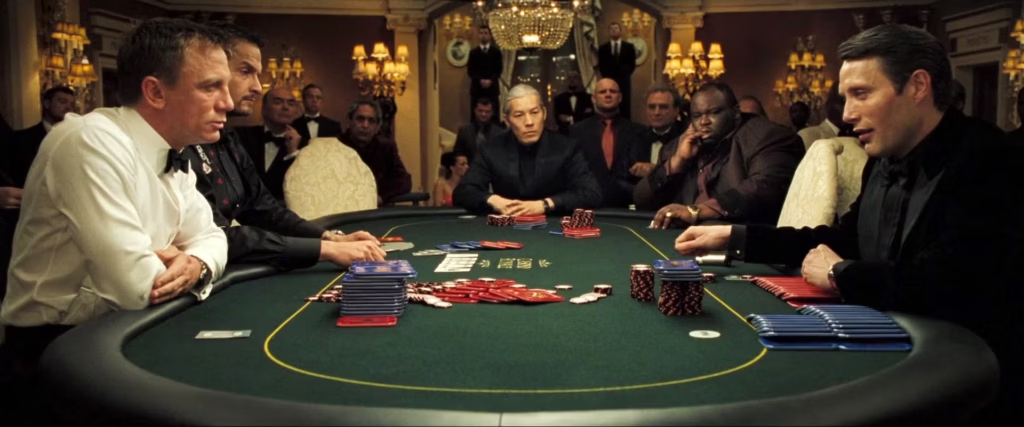
Casino Royale featured Daniel Craig at the poker table for nearly thirty minutes of screen time. The 2006 film pitted James Bond against villain Le Chiffre in a suspenseful showdown. The sequence used real game advisors despite Craig’s admitted lack of natural poker ability. The final hand delivered a straight flush victory over a full house, though mathematically improbable.
Martin Campbell’s direction focused on psychological endurance and statistical risk. The poker montage earned praise for technical accuracy despite some unlikely hands. Experts commend the film’s use of real poker tension while acknowledging dramatic license. The sequence broke franchise box office records, earning over $616 million worldwide.
Television Takes the Table
The Friends episode “The One with All the Poker” remains a cultural touchstone. Season 1’s poker night revealed character dynamics through competitive play. The episode ranks among the most-watched sitcom entries featuring the game. Fan polls consistently cite it as a defining early television portrayal of poker.
Classic Cons and Comedy
The Sting delivered one of cinema’s greatest poker cons in 1973. Paul Newman’s character defeats Robert Shaw’s villain using sleight of hand and psychological manipulation. The fabricated four-of-a-kind hand showcases deception as legitimate poker skill. The film won seven Academy Awards, including Best Picture.
Maverick brought comedy to poker cinema in 1994. Mel Gibson, Jodie Foster, and James Garner starred in the riverboat tournament finale. The film balanced humor with realistic hands and tells. Box office earnings exceeded $183 million globally, introducing poker to casual audiences.
Gritty Realism Takes Center Stage
Mississippi Grind portrayed gambling addiction with raw authenticity in 2015. Ryan Reynolds and Ben Mendelsohn traverse the American South seeking redemption through cards. Critics praised the film’s believable poker hands and weary character portrayals. The research and directorial commitment to realism impressed professional players.
Ocean’s Eleven used poker scenes to establish character relationships in 2001. George Clooney and Brad Pitt’s dynamic unfolds over cards, creating atmosphere rather than technical accuracy. The credible card play serves as shorthand for wit and intelligence.
Cultural Impact and Box Office Success
Critical metrics support poker’s continued screen presence. Rounders maintains an 87% critics’ score on Rotten Tomatoes. Casino Royale achieved a 94% critics’ score alongside record-breaking box office performance. Molly’s Game earned $59 million globally against a $30 million budget.
Streaming data confirms poker’s cultural relevance. US casino gaming searches grew 8% year-over-year as of mid-2025. Spikes correspond to televised tournaments and streaming releases. Classic films like Rounders experienced box office boosts during anniversary re-releases in 2024-2025.
Professional Analysis
Champion Darren Elias notes that mainstream films compress complex strategy into digestible moments. Technical realism often yields to narrative impact. Films like Rounders, Mississippi Grind, and Molly’s Game advance public understanding of poker tells, probability, and psychological manipulation.
The core appeal remains constant across decades. Poker represents psychological warfare combined with statistical challenge. High-stakes human drama unfolds around felt tables from The Sting’s 1970s con artistry to modern character studies. The game’s presence in pop culture demonstrates its enduring power as both entertainment and a metaphor for human nature under pressure.

Discover more from The Retro Network
Subscribe to get the latest posts sent to your email.



