
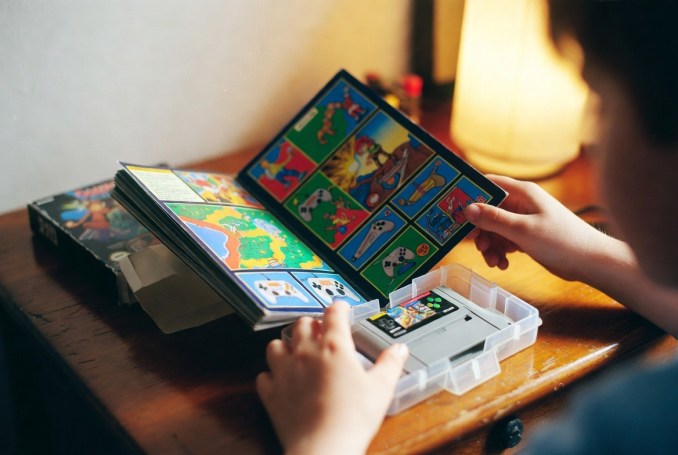
Opening a new game once involved a small ceremony. The plastic came off, the cartridge or disc stayed safely in its case, and the instruction booklet received the first proper look. Before the console was switched on, the game already had characters, places and rules.
Those booklets were practical, but they also carried some of the atmosphere that limited hardware could not squeeze onto the screen. A well-made manual turned waiting into preparation and gave the journey a beginning outside the game itself.
The Manual Had Real Work to Do
Early console games had little space for lengthy introductions. Developers needed most of the available memory for graphics, sound and gameplay, so explanations were handed to the printed booklet.
A typical manual might contain:
- controller layouts;
- character biographies;
- a summary of the story;
- descriptions of weapons or items;
- maps and enemy illustrations;
- saving or password instructions;
- troubleshooting and safety information.
The pages could explain why a character was travelling through a dangerous world even when the game opened with little more than a title screen. This mattered in adventures and role-playing games, but action titles also benefited. A strange icon made more sense after its illustration had appeared beside a short description.
Manuals gave publishers another opportunity to establish tone. Horror games used dark artwork and fragmented notes, while colourful platformers filled their pages with jokes and cartoon characters. The writing could make a technically simple game feel much larger.
Clear Rules Still Need a Home
The basic job of the manual survives wherever a digital game requires information before play. A guide covering online casinos no deposit bonus can organise eligibility, offer details and game access without crowding the main interface. Instructions for no deposit bonus codes work best when the entry process and applicable conditions are placed together. A no deposit bonus casino can keep account controls, game rules and promotional information in clearly marked areas. Details supplied by a no deposit bonus casino Australia also need to account for the relevant currency, availability and platform terms. The printed booklet has largely disappeared, but the need for orderly instructions remains.
Modern interfaces can reveal information only when it becomes relevant. An old manual had to anticipate every likely question and answer it before anyone knew which parts would cause trouble.
Reading Began Before Playing
The trip home gave the booklet a rare moment of undivided attention. Artwork was studied, move lists were memorised and maps were examined long before the opening level. By the time the game loaded, some places and enemies already felt familiar.
Rental games created a different experience. Manuals were frequently missing, damaged or replaced by a photocopied control sheet. That absence could make an already difficult title almost impenetrable. Discovering an unexplained inventory screen or unusual save system became part of the weekend’s challenge.
The manual also became a shared reference. Siblings argued over it, friends copied passwords into its back pages and useful sections collected fingerprints and creases. Unlike an in-game tutorial, it could remain open beside the television while the action continued.
Different Genres Needed Different Booklets
The style of a manual often revealed what kind of game waited inside the box.
| Game genre | Common manual content | Why it mattered |
| Platformer | Controls, power-ups, enemies | Explained unfamiliar abilities quickly |
| Role-playing game | Characters, items, statistics | Made complex systems easier to follow |
| Fighting game | Move lists and button combinations | Provided a reference during practice |
| Adventure game | Story, maps and clues | Established the world before exploration |
| Simulation | Menus, systems and procedures | Replaced extensive on-screen training |
Some PC game manuals grew into substantial technical guides because simulations and strategy titles depended on dozens of commands. Fighting-game booklets were treated more like reference cards, repeatedly opened until special moves became muscle memory.
The format adapted to the game rather than forcing every explanation into one template. That flexibility gave manuals personality and made the better examples worth keeping after the game had been completed.

Tutorials Moved Inside the Game
As storage expanded, developers could teach controls through playable scenes, pop-up prompts and practice areas. Digital distribution also removed the box that once carried the booklet. Printing a colour manual for every copy became an avoidable expense.
This solved several practical problems. An interactive tutorial could detect whether a task had been completed, while an update could revise instructions after a control scheme changed. Printed pages could not respond to a patch.
Something quieter was lost in the exchange. On-screen prompts usually explain the immediate action and then disappear. Manuals encouraged browsing, allowing a late-game item or mysterious character to be noticed early and remembered for later.
The Booklets Became Historical Records
Original manuals now help collectors establish whether a boxed game is complete. They also preserve artwork, terminology and background details that may never appear in the software. Nintendo still provides downloadable manuals for several older systems, while SEGA hosts digital versions for games included with the Genesis Mini.
Collector’s editions occasionally revive the format through art books, maps and replica booklets. Indie developers also produce manuals when a release deliberately echoes the cartridge era.
The old instruction booklet succeeded because it respected the pleasure of anticipation. It allowed a game to begin on paper, several minutes before the first button was pressed, and gave the world somewhere to exist after the console was turned off.
Discover more from The Retro Network
Subscribe to get the latest posts sent to your email.

