
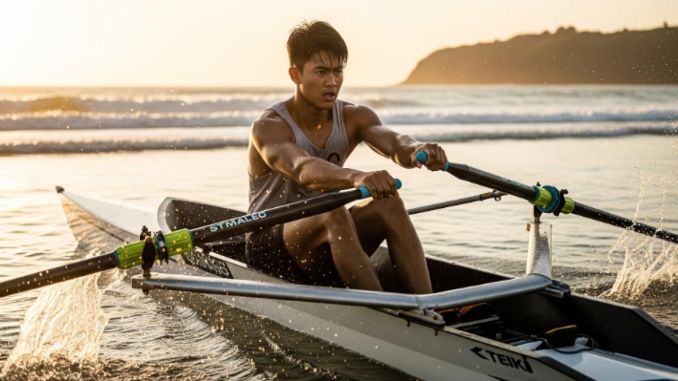
Philippine rowing has moved from a quiet corner of the national sports calendar into a useful case study for athlete development. The 2026 Asian Rowing Beach Sprint Championships in Pattaya gave the program a visible result: Emman Pillar won gold in the U16 coastal men’s solo, Matt Jugadora took silver in the U19 coastal men’s solo, and the team added more gold through Ayonna Huerto, Khayzie Caviltes, Kyle Olano, and Pillar in double sculls events. The details matter because these were not senior stars extending old reputations. They were younger rowers winning in a format that rewards acceleration, balance, open-water control, and the nerve to handle a beach sprint under time pressure. That is a different kind of sporting evidence.
Pattaya Put New Names on the Board
The Asian rowing championships result in Thailand carried more weight because it showed depth below the Olympic layer. Joanie Delgaco had already changed the sport’s visibility by becoming the first Filipina rower to qualify for the Olympics at Paris 2024, then finishing 20th overall in women’s single sculls after a 7:43.83 Final D row. In December 2025, Delgaco and Kristine Paraon won SEA Games gold in women’s double sculls with an 8:16.976 final, beating the Thai pair by more than 4 seconds. Those senior markers gave the juniors something tangible to chase. Small observation: the beach sprint format exposed which crews could turn tightly around the buoy without losing blade rhythm, a skill that does not show up in a flat-water result sheet.
Markets Notice When Results Stop Looking Random
Competitive outlooks become sharper when a program produces consistent evidence rather than a single lucky podium. A bettor studying niche events in 2026 has to separate a single medal from a system that can keep producing crews, because variance behaves differently when a country brings multiple age-group finalists to Pattaya. That is where a betting site in the Philippines may serve as a second screen for fans tracking odds, event schedules, and performance expectations across Olympic-adjacent sports. The useful habit is to read markets beside verified results, not ahead of them. Rowing has enough weather, lane, current, and start-sequence variables to punish lazy predictions. One missed catch at 250 meters can erase a clean first 500.
Grassroots Rowers Are Changing the Map
Sports development Philippines often looks strongest when the pipeline reaches places far from private-school gyms and commercial leagues. Patrick Gregorio, chair of the Philippine Sports Commission and a former Philippine Rowing Association president, described Pillar and Jugadora as sons of fishermen from Ternate, Cavite, which helps explain why beach sprint rowing is more than a technical agenda. Athletes who grow up around boats, water, current, and balance already carry instincts that can be trained into race habits. The institutional task is to add coaching, nutrition, access to equipment, and travel support before raw ability is lost to work or school pressures. The boat does not lie. If a young rower cannot hold posture after a hard beach run and a fast launch, the clock says so before a coach does.
Niche Sports Now Compete for the Same Screen
Filipino athletes 2026 are being judged in a media setting where basketball clips, PVL rallies, Olympic updates, and combat-sports reels all fight for the same scroll. That affects rowing because a 30-second clip of a beach-sprint start can explain the sport more quickly than a federation memo. Fans who follow combat sports already understand performance projection, and a person comparing camp discipline before a fight may use ufc betting to read styles, weight cuts, takedown defense, and five-round durability. The same analytical habit helps niche sports when viewers learn to ask better questions about race pace, split times, crew chemistry, and preparation blocks. Digital coverage rewards athletes whose results arrive with a clear story. Rowing now has names, medals, and a format that looks good on a phone.
Digital Leisure Sits Beside Sports Discovery
The rise of Olympic sports Philippines also depends on how audiences spend their short breaks, around training clips and live scores. A viewer can watch Delgaco’s Olympic race replay, check a SEA Games result, then move into another form of mobile entertainment before returning to a federation post. In that broader leisure pattern, the best online casino Philippines belongs to a different activity type, built around slots, live dealer games, RNG-tested outcomes, and bankroll limits rather than athletic performance. The distinction matters because sports development relies on coaching systems and public funding, while casino play relies on game mechanics, house edge, session control, and account discipline. Both compete for attention on the same device, but they do not measure skill the same way. That difference should stay clear in any serious sports coverage.
The Next Test Is Repetition
The next stage for Philippine rowing is not a better press release; it is repetition across 2026 and beyond. Coaches need more juniors who can move from indoor rowing meets to coastal starts, then from age-group races to senior international fields without losing technical shape. The Delgaco-Paraon SEA Games gold showed what senior preparation can produce, while the Pattaya medals showed younger crews responding to international pressure. Small observation: the best Philippine crews in beach sprint events looked most settled after the turn, where less balanced boats usually bleed seconds. If the program keeps finding athletes in coastal communities, adds systematic strength work, and sends rowers to Asian events before they are overmatched, the sport will stop feeling like a surprise. It will start looking planned.
Discover more from The Retro Network
Subscribe to get the latest posts sent to your email.

